
Envisioned and Forged in Pakistan
Envisioned and Forged in Pakistan
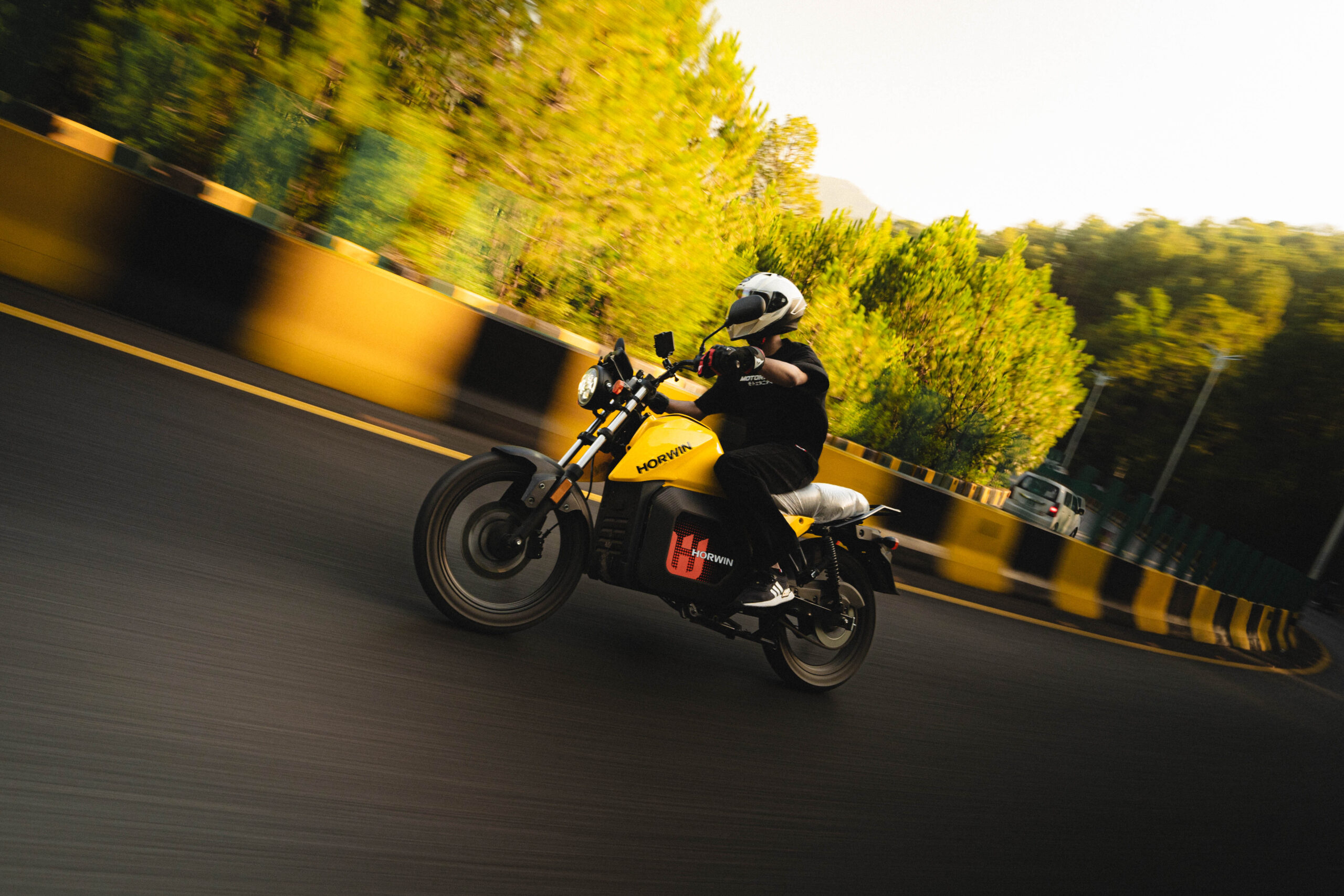
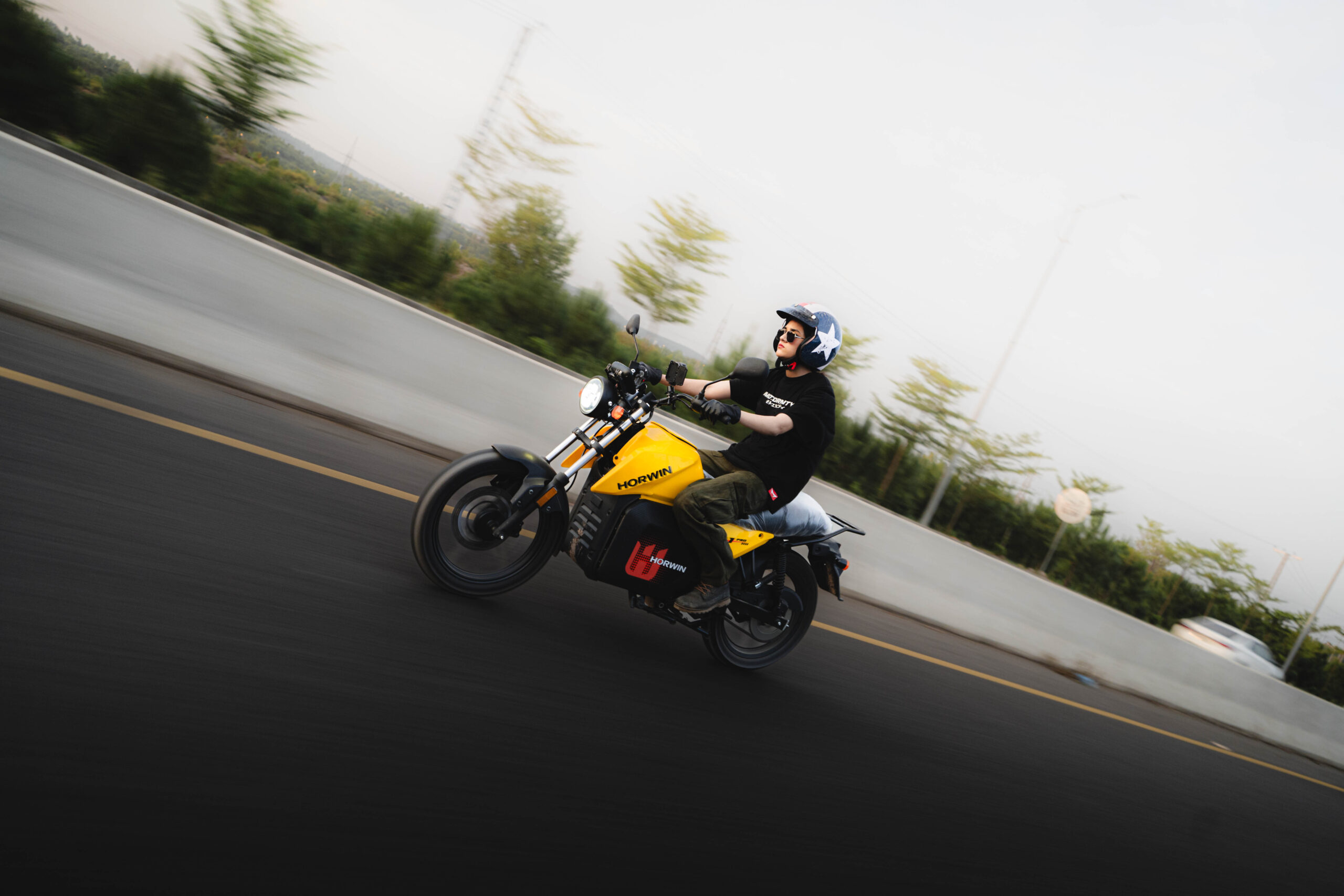
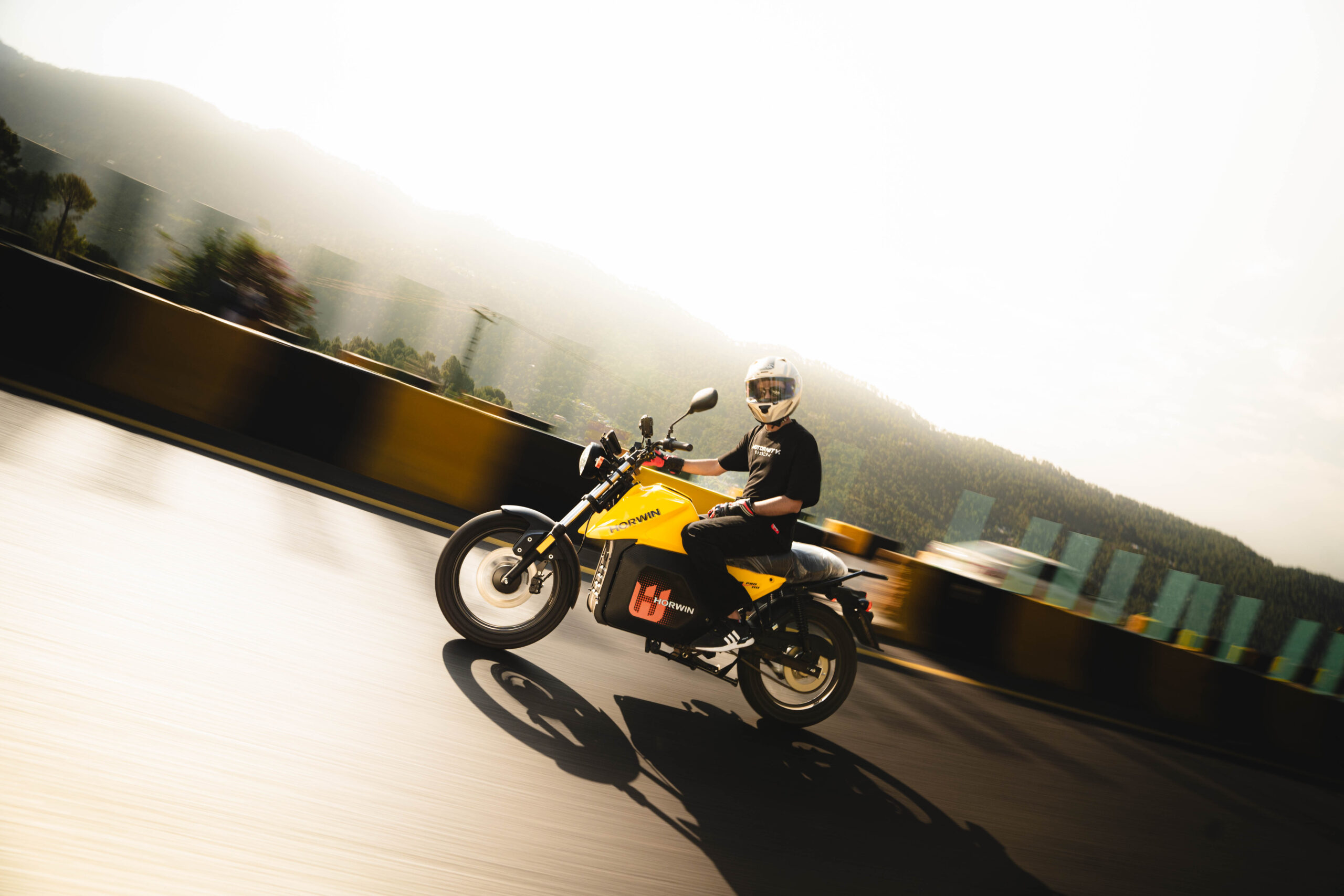
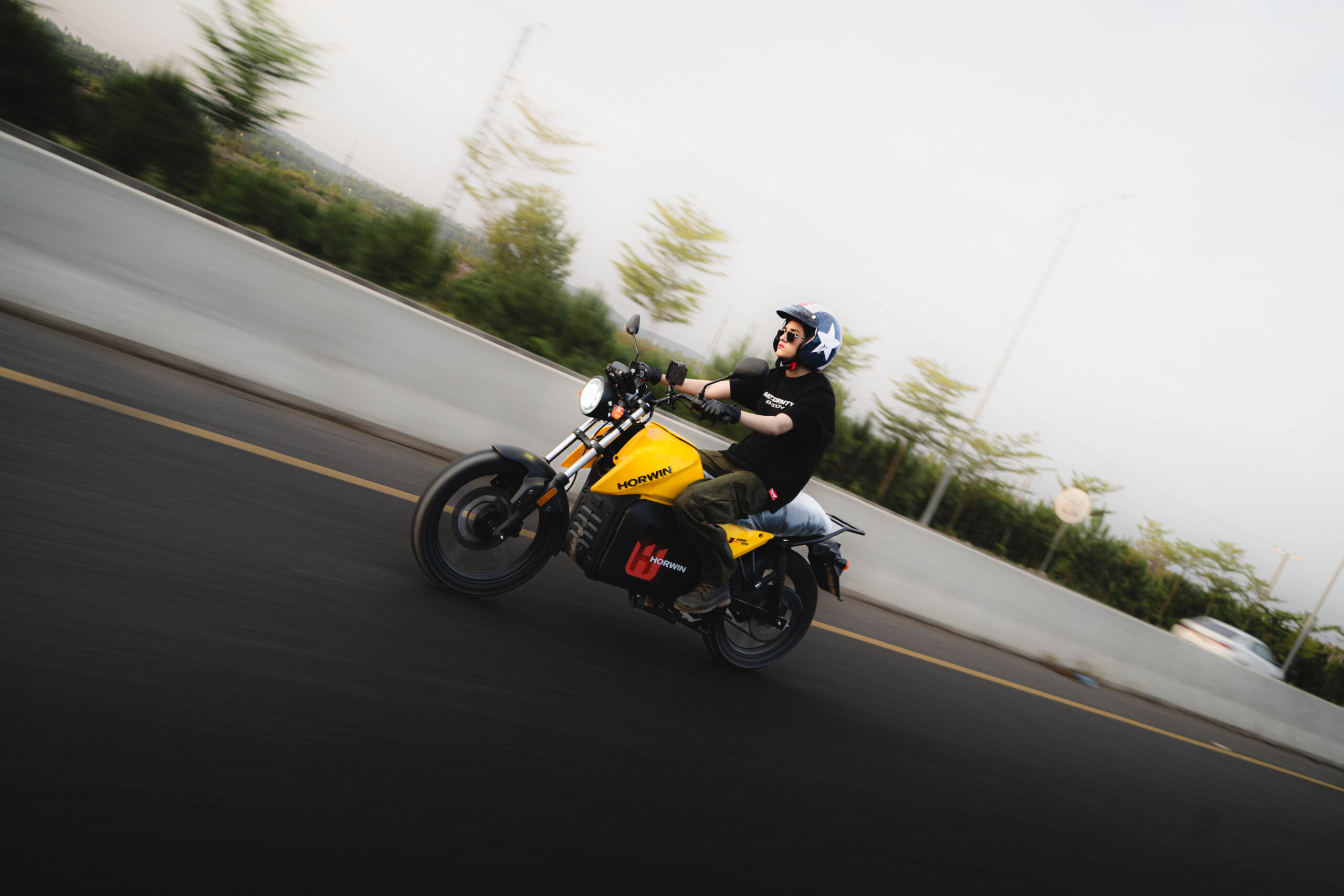
Horwin’s take on the CR1s design is quite conservative rather than bold and flashy. It has plain but functional proportions which optimally blend retro with modern. The 8L metal tank has boxy and rectangular design elements that give it a rugged appearance. It is supported by plastic half-fairings and is repurposed for the storage of the charger and other items. It can be accessed by opening the tank lid through the main key. Up front you will find a round LED headlight which further compliments the neo-retro aesthetic which Horwin has aimed for.
It has standard medium-width handlebars with a high rise and slight pullback combined with foot pegs which are set in a neutral position which result in comfortable upright ergonomics typical of a commuter. Taking a closer look, it will be noticed that there is no brake lever on the left handlebar assembly. Instead, the rear brake is applied by a pedal near the right footpeg like a normal motorcycle which purists will appreciate. The seat is a single piece, but it is an adequate size for carrying a pillion.
The included rear carrier rack is sturdy and completely capable of handling the addition of a top box to carry extra luggage, ultimately increasing its practicality. It can also be used to man-handle the bike in tight parking spots. All in all the CR1 feels simple and straightforward in nature which is an appropriate trait for a commuter.
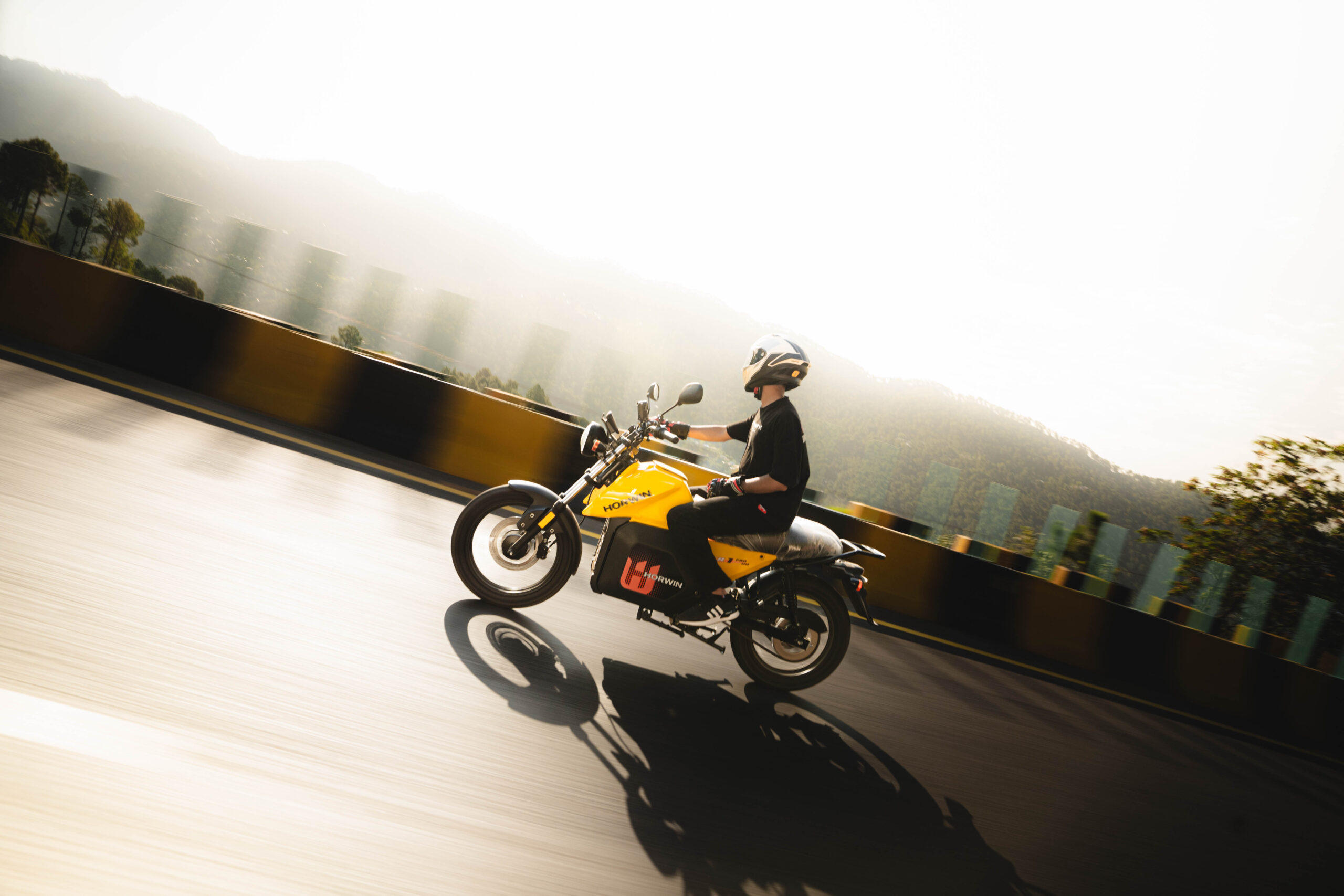
This is where the CR1 Pro excels. It has a brushless DC motor rated at 4.5KW that is mounted in the middle of the chassis unlike the rear hub-mounted motors which were the standard in all other local EVs. There are major advantages to this layout. Firstly, increased cooling. Rear hub-mounted motors are isolated from airflow due to which they suffer from higher thermal stress (especially in hot summers) and because they are mounted to the rear wheel the extra heat increases the temperature of the tyre as well which results in increased tyre wear over time. Secondly, it allows for better weight distribution which directly influences the handling feel to be neutral instead of being rear-heavy. At high speeds this matters because the rear-bias of a hub motor could result in the front-end becoming light which reduces stability.
The motor is connected to the rear wheel via a traditional chain drive system which is another first for the local industry. In the event of a tyre puncture it is much easier to remove the rear wheel as compared to a hub-mounted motor EVs rear wheel which is a hassle to remove because the whole motor needs to be disassembled to access the rear tyre. In an emergency, a chain drive system can save both time and money. A chain sprocket setup also unlocks the modification of the final drive ratio which is a plus for enthusiasts looking to fine-tune the performance of the drivetrain according to their preferences. The stock sprocket setup consists of an unusually large 58-teeth rear sprocket which explains the low top speed of 85km/h (relative to 4.5KW of power) as this setup heavily prioritizes instant acceleration. To those aiming for a higher top speed, a smaller sized rear sprocket swap is a must.
Horwin claims that the CR1 Pro weighs 84kg without the battery installed which is very impressive. Even if the additional weight of the battery is added the total weight comes out to be approximately 104kg. That is much lighter than other similarly sized bikes and roughly similar to the national motorcycle of Pakistan the Honda CG125 which is known to be very light. This is particularly advantageous in an urban environment where maneuverability through tight spaces is the main concern.
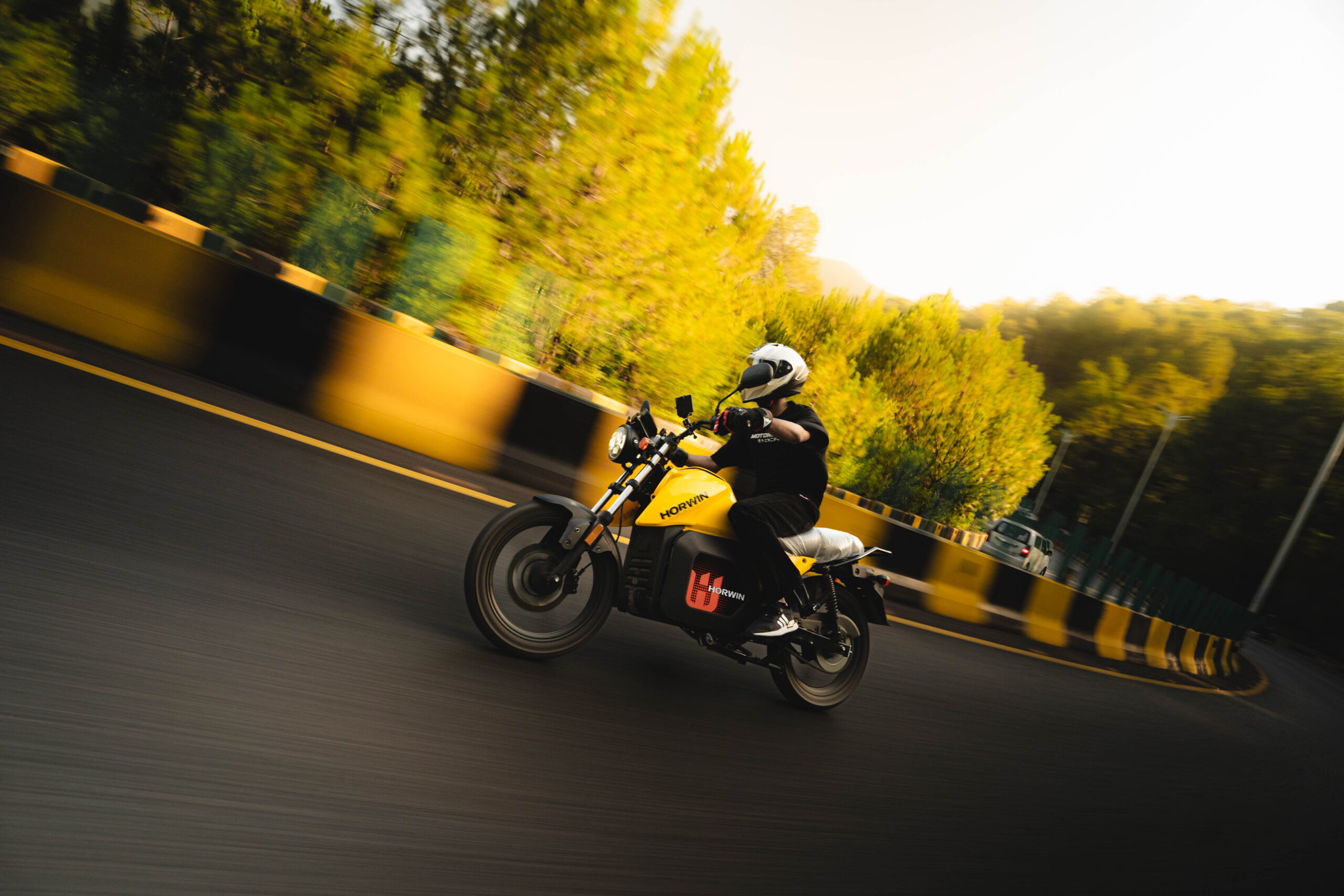
Equipment is scarce. There is a complete absence of electronic rider aids which is acceptable in this category. The switchgear assembly is barebones only covering the essentials such as the switch for the three power modes and the parking button on the right switchgear and a high-low beam switch, indicator switch (which surprisingly has no cancellation button) and a horn button. The instrument cluster screen is similarly lacking, being of the monotone LCD type, only displaying basic info. On a positive note, The CR1 has a regenerative braking system which helps to optimize the range. The ECUs are CAN-bus protocol compliant which simplifies the communication between them. The battery is easily removeable and upgradeable. It has a neat safety feature which is the side-stand killswitch that disables the motor from being engaged until the stand is folded. Yes, this is a standard feature among all international motorcycles, but it is rarely seen in Pakistan.
There is also the inclusion of a main stand and the sturdy rear carrier rack which was mentioned previously.
The CR1 Pro redeems itself in this segment. With its low retail price and the best-in-class motor and battery, it offers good value. Unfortunately, at the time of writing this review there are barely any competitive local options available in the electric motorcycle category.
The new Pakistani brand Vlektra offers the Bolt as their flagship electric motorcycle. It has a street naked design with sporty proportions. Brakes wise the Bolt boasts a decently sized rear disc instead of the drum found in the CR1. In terms of suspension it is equipped with USD / Inverted forks at the front and a monoshock at the rear which may seem better on paper but in reality the Horwins basic suspension setup feels more compliant on the road. The Bolt has a weaker 3KW motor that is rear hub-mounted and a smaller capacity 38AH LFP battery. Considering that the Bolt has a retail price of 549,000 PKR, the CR1 is clearly the winner in terms of pure value. On the more budget end of the spectrum, Vlektra also offers the Velocity 180 SE that showcases a 2KW rear hub-mounted motor and a 36AH LFP battery. It retails at a more affordable 384,000PKR but in specs, refinement and as a complete product it is clearly inferior to the CR1 Pro.
Interestingly, Horwin also makes an enhanced variant of the CR1 known as the CD1 internationally. In Pakistan it is sold with the model name QB5 instead. The QB5 addresses many weaknesses of the CR1 by using several upgraded components. The frame is a more robust and structurally rigid full duplex double cradle instead of the single cradle of the CR1. Wheelbase is 70mm longer at 1470mm. The instrument cluster is a greatly improved full color TFT which can be controlled through buttons located on the back panel. The QB5 replaces the old rear drum brake with a 220mm disc gripped by a single piston caliper that is attached to the new improved 3-piston LBN(Wenzhou Libang) branded front brake caliper through an additional rubber brake line to form a linked braking system (CBS). What this means is that the QB5 has a stronger performing and safer brake setup. It also benefits from a larger front headlight with chrome surrounds and a U shaped DRL. The QB5s saddle is also different. It is made of higher quality fabric and has better cushioning to maintain comfort during longer rides. The rear carrier rack is larger and has additional supporting metal tubes for increased durability. The storage tank has a bigger opening with a thicker, more properly installed rubber gasket. There is also a USB A charging port present inside the tank. All these additional upgrades demand a 90,000PKR premium as the QB5 retails for 560,000PKR which is justified. Both the CR1 and the QB5 are tied in this value comparison.
(all retail prices mentioned in this segment were recorded at the time of writing and are subjective to change)
2 Comments
Well explained!
This was very helpful can we get a similar one for Royal GPX Demon GR 250 R